
● Made in Bangladesh ● Trusted by International Buyers Since 2018
The right shape.
Your mark, worn well.
Sampling time
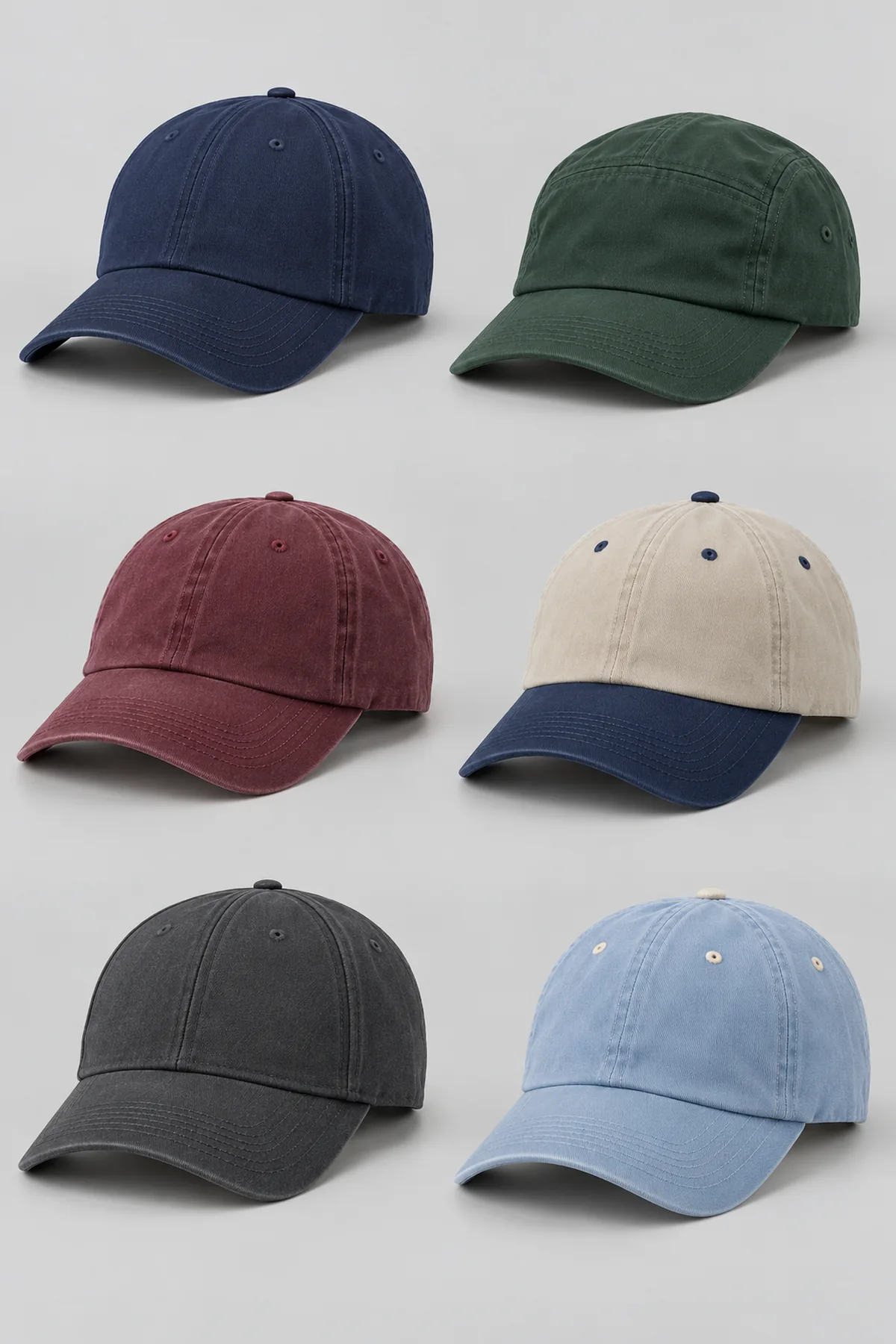
Established in Bangladesh
Team size from our factory profile
Your artwork, labels and packing
THE PRODUCT
Start by naming the crown and intended use. A structured six-panel baseball cap, a relaxed unstructured shape and a broad-front five-panel cap cannot share one pattern assumption. Give your Baseball Caps Manufacturer in Bangladesh crown height and depth, number and shape of panels, eyelets, top button, visor length and curve, back opening and closure details. Decide whether the cap is for everyday retail, a team, a uniform or a promotion. The artwork area, shade tolerance and packing may differ by programme. Give the development team a physical cap or measurements when the fit matters.
Wear the sewn sample and check the front profile, side balance and back fit. The visor should sit straight and hold the intended curve, not pull the front panels out of shape. Adjust the closure through its useful range; test whether the sweatband lies smoothly and whether seams or stiffener create pressure. Examine the cap before and after the agreed care trial where appropriate. Give your Baseball Caps Manufacturer in Bangladesh photographs from front, side, back and underside, with corrections recorded by version. Approve the decorated cap, not only its blank shape.
Give your Baseball Caps Manufacturer in Bangladesh circumference or fit range, crown depth and height, front panel width, seam positions, visor length and width, and the preferred curve. State whether the profile is high, medium or low and how it should look on a wearer. Specify panel count, eyelet or ventilation positions, top button, back opening and closure length. Measurements should have agreed points and tolerances; a generic one-size label does not define the actual fit or crown geometry.
Approve body fabric, buckram or another front support, visor board, underside fabric, sweatband, inside tape, thread and closure together with your Baseball Caps Manufacturer in Bangladesh. Cotton twill baseball caps can take embroidery well, but the actual weave, weight and hand must be reviewed. A brushed surface changes the look of a print or patch. Match all panel shades and verify that the visor and sweatband remain comfortable after construction and care. Retain physical references of the approved components for inspection and reorders.
An adjustable closure creates a range, not an unlimited fit. Review the cap near both ends and at the centre of the usable adjustment with your Baseball Caps Manufacturer in Bangladesh. Check how the back opening, strap or buckle sits against the head and whether a crown change affects the fit. A fitted size programme requires graded patterns and separate circumference checks; do not treat it as merely removing the strap from an adjustable cap. Record any youth or special sizing separately from the adult reference sample.
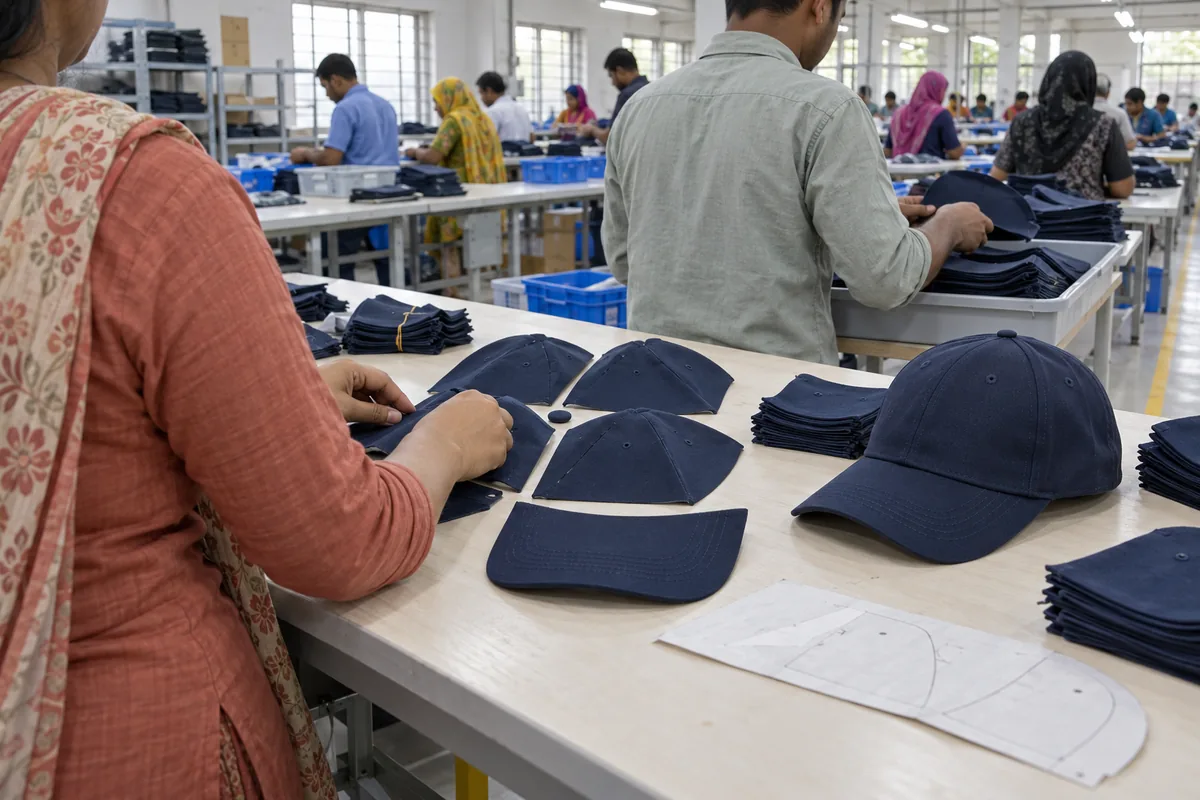
PROFILE BEFORE PRINT
Approve crown, visor, closure and comfort before locking artwork.
Private label baseball caps can carry flat or raised embroidery, woven or rubber patches, side marks, inside tape, sweatband labels and branded packaging. Send your Baseball Caps Manufacturer in Bangladesh editable artwork, stitch or material direction, placement measurements, thread colours and a maximum decoration area. A dense front design can distort a soft unstructured panel, while a curved seam can interrupt a small side mark. Check the actual embroidery or patch on the sewn cap in every intended colourway. Match hangtags, barcodes and cartons to the approved version so a repeat order does not lose its brand details.
For a suitable stock-fabric route, plan around 576 finished caps per colour and style. A completely custom fabric programme may need about 5,184 pieces per colour and style; the actual minimum is quotation-dependent. Give your Baseball Caps Manufacturer in Bangladesh panel fabric, structure, visor, closure, sweatband, embroidery, labels and colour allocation for costing. Sampling may take 10–15 days after the brief is complete. At the applicable MOQ, bulk production may take 15–30 days after PP sample and material approval. Custom weaving, complex embroidery, specialty closure or revised artwork can extend the schedule. These are planning ranges, not dispatch or arrival guarantees.
MOQ per design / colour
Sample lead time
Production lead time
Send a reference cap or drawing, target crown profile and panel count, circumference or fit range, visor shape, fabric and support direction, back closure, sweatband, artwork files, decoration placements, labels, quantities by colour and style, packing and destination. Tell your Baseball Caps Manufacturer in Bangladesh whether suitable stock fabric is acceptable or a new article is required. That distinction affects the planning MOQ and material schedule. A precise brief lets the sample be assessed as one product instead of a collection of separate trim decisions.
Compare the bulk cap with its signed PP sample. Check crown symmetry, panel seams, front shape, eyelet spacing, visor length and alignment, board insertion, underside and top button. Test the closure range and sweatband contact. Inspect embroidery for position, density, loose threads, backing and colour; compare patch edges and label placement. Review measurements of representative units across colourways and fit sizes with your Baseball Caps Manufacturer in Bangladesh. Review shade and care response according to the agreed specification. Final inspection should include the packed cap and carton allocation, not only the sewing operation.
Visor boards, undersides, buckram, inside tape, custom cap sweatbands and closures form the cap’s structure. Specify each article and colour. Check the board’s curve and edge, closure security and skin-side contact after assembly. A component substitution can alter crown shape or comfort even when the outside fabric looks identical.
Confirm crown profile, panel count, fit range, visor, fabric and front support, eyelets, button, back opening, closure, sweatband, artwork, labels, packing and destination with your Baseball Caps Manufacturer in Bangladesh. Provide measurements or a physical cap for the intended look. Identify stock-fabric versus newly developed fabric early, and write colour and style quantities separately for an accurate production-route decision.
Give your Baseball Caps Manufacturer in Bangladesh approval of one corrected physical PP cap with its pattern, panel fabric, support, visor board, closure, sweatband, embroidery files, thread colours, labels and packing reference. Photograph all sides and inside details. Record a named version and any approved colour variants. Reopen the decision if fabric, structure or decoration changes before cutting. Use the same signed cap for final inspection and repeat quotations.
With a suitable stock fabric, plan around 576 finished caps per colour and style. A newly developed custom fabric may require about 5,184 per colour and style. Fabric, visor, closure, decoration and packing affect the route, and the final quotation confirms the applicable minimum.
A structured front, a softer unstructured crown, six-panel or five-panel constructions can be discussed from a reference. Each has a different pattern, support and embroidery behaviour. Approve the actual worn cap, visor and closure as one version before bulk production.
Cotton twill baseball caps, brushed cotton and selected performance woven fabrics can be reviewed. Confirm composition, weave, weight, hand, shade, care and how the actual article works with front support and decoration. A fabric label alone does not establish performance.
Record circumference or fit range, crown depth, front height, panel shape, visor and back opening. Wear-test the sample at the centre and ends of its adjustment range. Check sweatband contact, closure security and how the crown profile sits on the intended wearer.
Flat or raised embroidery and selected patches can be reviewed against editable artwork, thread colours, size and placement measurements. A stitch-out on the intended front panel helps reveal distortion, backing comfort and shade. Approve the sewn, decorated cap rather than an artwork proof alone.
Curved or flat visor directions and buckle, snap, hook-and-loop or other buyer-specified closures can be discussed. The choice must fit the crown and head range. Test visor alignment and closure adjustment on the completed sample; the quotation confirms available components.
Sampling may take 10–15 days after a complete brief. At the applicable MOQ, bulk production may take 15–30 days after PP and material approval. Newly developed fabric, specialty trims or complex embroidery can extend the schedule. The order quotation confirms timing; freight is separate.
Inspect crown symmetry, panel seams, visor shape, closure, sweatband, embroidery, labels and fit against the signed sample. Match style, colour and artwork version, then protect the visor in the approved retail or export pack and check carton ratios before dispatch.
Send a cap reference or tech pack, crown profile, panel count, fit range, visor, fabric, front support, closure, sweatband, artwork, labels, quantities by style and colour, packing, destination and target arrival. State whether stock fabric is acceptable or custom fabric is required.
A baseball cap is understood at a glance, yet small pattern decisions determine whether it looks and feels right. For curved visor baseball caps, the height and slope of the front, the shape of side panels and the visor’s relation to the crown create the profile. Structured baseball caps may need a supported front to present embroidery cleanly. Unstructured baseball caps rely more on fabric hand and panel shaping. Ask for a worn reference or measured physical cap, not only a flat picture. The brief should state panel count, crown depth, circumference or fit range, back opening and visor size before artwork is placed.
Six-panel baseball caps have a familiar segmented construction, but the seams, front area and top button can vary by design. Five-panel baseball caps offer a different front canvas and pattern geometry. Neither is automatically better for every logo. Test whether the front panel gives the artwork enough space without crossing a seam or forcing a stiff hand. Check the cap from front, side and back while worn. A visor that is too long or a crown that is too high can change the entire brand impression even when dimensions on a drawing appear close.
Give your Baseball Caps Manufacturer in Bangladesh a sample version and fit comments in one place. Crown height, visor curve and closure length should be approved together, then checked again after decoration. Fit is a range for adjustable caps, not a promise that one cap suits every head. A precise reference lets bulk baseball cap production follow the approved shape rather than a generic stock silhouette.
Cotton twill baseball caps can provide a durable woven face and a classic look, but the actual weight, weave and finish matter. Review panel shade and direction with your Baseball Caps Manufacturer in Bangladesh under consistent light; an inconsistent cut can make one panel look darker. Brushed cotton changes the surface and embroidery appearance. A lightweight polyester or nylon woven can be explored for a different brief, provided any performance requirement is defined and tested on the real article. Do not equate a fibre name with a verified result.
The outside cloth is only one part of the cap. Specify front support or buckram, visor board, underside fabric, top button, eyelets, sweatband, inside tape, thread and closure. Check the board’s curve, edge finish and central alignment. A cap can look good on a table yet press uncomfortably at the brow or sit crooked because the visor and crown were assembled with different tension. Test the complete sample on the intended fit range, then inspect the shape after ordinary handling and the agreed care trial.
Keep physical component references with the signed PP cap. A new board or closure may change fit and balance even if the outside fabric is identical. For wholesale baseball caps, shade and construction consistency should be reviewed across several units, not assumed from one showroom sample. A buyer deciding between stock and custom fabric needs to understand the minimum, material approval and timing attached to each route.
Embroidered baseball caps depend on the relationship between artwork and structure. A wide mark may work on a firm front panel but distort a soft crown. Dense raised embroidery can create pull; a patch adds edge and attachment decisions. Send your Baseball Caps Manufacturer in Bangladesh editable files with dimensions, thread colours, placement from seams and the desired stitch or patch method. Ask to see a stitch-out on the actual fabric and a complete decorated cap before bulk approval. Front, side and back branding need separate positions and scale checks.
Private label baseball caps may also carry an inside sweatband mark, branded seam tape, woven label, hangtag, barcode and retail bag. Review every label for comfort, legibility and location. Care guidance should reflect the complete article, including visor, support and decoration. The official GINETEX care-labelling resource is a general reference; symbol rights and destination-market rules need the buyer’s own review, and this page makes no certification claim.
Approve colourways separately when the underlying fabric or thread shade changes. A red logo on a dark crown may require a different stitch density or backing from the same mark on pale cloth. Keep artwork version, thread card, patch article and packed-unit reference together. That makes a reorder a controlled repeat rather than an attempt to reconstruct the cap from a marketing image.
Custom baseball caps should be quoted against a named crown and visor reference rather than a logo file alone. For promotional baseball caps, confirm the event allocation and required arrival before choosing the decoration route. Low profile baseball caps need their own worn sample because reducing crown depth can change the front artwork area and how the visor meets the brow. Give your baseball cap supplier the approved profile, fit range and logo dimensions together. This keeps a late artwork revision from unintentionally changing the shape selected for the collection.
An adjustable baseball cap needs a closure that works through a useful range and does not create a hard contact point. Agree buckle, snap, hook-and-loop or another approved system with your Baseball Caps Manufacturer in Bangladesh, including strap length, back opening and finishing method. Test the cap near the middle and both ends of adjustment. The crown may tilt or the opening may gape when a closure is stretched to its limit. A fitter should assess the cap while worn, not only by measuring the strap flat.
The sweatband, inner seams, eyelets and visor underside influence comfort. Check whether the band lies flat, whether stiff seams touch the forehead and whether the cap remains balanced with the visor centred. A team baseball cap may prioritise repeatable colours and crest placement. A retail style may prioritise a particular profile and label finish. A promotional version may need robust decoration and a fixed delivery event. Write the use into the specification so the approval tests reflect the buyer’s real purpose.
For a fitted or youth variant, create separate size rules and samples. Removing an adjustable closure does not automatically make a sound fitted pattern, and scaling an adult crown down may alter visor proportion. Keep each profile’s pattern, fit range and packing distinct. This prevents a related headwear style from silently replacing the cap the buyer approved.
A stock-fabric baseball cap programme may be planned from 576 finished pieces per colour and style. If a completely new fabric has to be developed, the planning minimum may be about 5,184 per colour and style. Those figures are source-based planning references, not an unconditional commitment by this company. Ask your Baseball Caps Manufacturer in Bangladesh to confirm fabric availability, panel construction, visor, closure, embroidery, labels, colour split and packing in the final quotation. Combining unrelated styles or fabrics does not automatically meet one minimum.
Sampling may require 10–15 days after the technical brief and artwork are complete. At the applicable MOQ, bulk production may take 15–30 days after PP approval and material readiness. A custom weave, imported board, specialty closure, revised stitch-out or delayed colour standard can extend the schedule. Do not count freight or customs inside factory production time. Record an approval owner and date for the shape, material, fit, artwork and packed cap so the quotation can be compared with the real decision path.
A Baseball Caps Manufacturer in Bangladesh should coordinate pattern work, material sourcing, cutting, front support, crown sewing, visor assembly, closure attachment, embroidery, finishing, inspection and packing. Capacity by itself does not protect the buyer when an artwork file or component remains unapproved. Work backward from the required arrival to establish realistic sampling, production and transport windows. This is more useful than treating a generic lead-time card as a shipping promise.
Inspect a finished cap against the signed physical sample. Review crown height and symmetry, panel seams, eyelets, top button, visor centre and curve, front support, sweatband, inside tape, back opening and closure with your Baseball Caps Manufacturer in Bangladesh. Verify embroidery placement, colour, density, backing and loose threads. Wear-test representative caps at different adjustment positions and review panel shade across colourways. A visually strong front view is not enough if the cap pinches or the visor is misaligned.
Baseball cap export packing should preserve the approved profile. Agree whether caps are individually bagged, nested or packed with visor protection. Match style, fabric, colour, crest or brand version, fit mark and barcode to the purchase order. Check the retail unit and carton ratio against an approved packed reference. Similar club colours and embroidery versions should be segregated so a good-quality cap is not sent to the wrong buyer allocation.
For repeat orders, retain pattern pieces, measurements, body and support fabrics, board, closure, sweatband, embroidery files, thread colours, labels and the packed cap. Recheck substituted components and confirm stock availability before repeating an old price or lead time. A version log distinguishes a true repeat from a redesign when the brand changes its crown, visor or artwork. This protects fit, presentation and dispatch accuracy across seasons.
YOUR NEXT HEADWEAR COLLECTION
Send a brief to a Baseball Caps Manufacturer in Bangladesh: crown, panels, visor, fit, fabric, closure, embroidery, labels, quantities and destination.
576 Pcs · Planning minimum per colour / style with suitable stock fabric; custom fabric may need 5,184
10–15 days · Sampling estimate
15–30 days · Production estimate after PP approval at applicable MOQ
Final minimum and timing depend on materials, decoration and packing. Freight is separate.
Discuss on WhatsApp ↗
+880 1712396281
WhatsApp Us